
Experiences / Festivals & Public Experiences
The precinct is the experience.
A public gathering is not a stage plus an audience. It is how people arrive, move, pause and leave a place.
Beyond the stage
Design the ground people walk on.
Programming, vendors, access, weather and neighbours all share the same site. If only the stage is designed, the rest of the day becomes improvisation.
We approach festivals and public experiences as environments. We do not claim specialist festival credentials we cannot evidence.
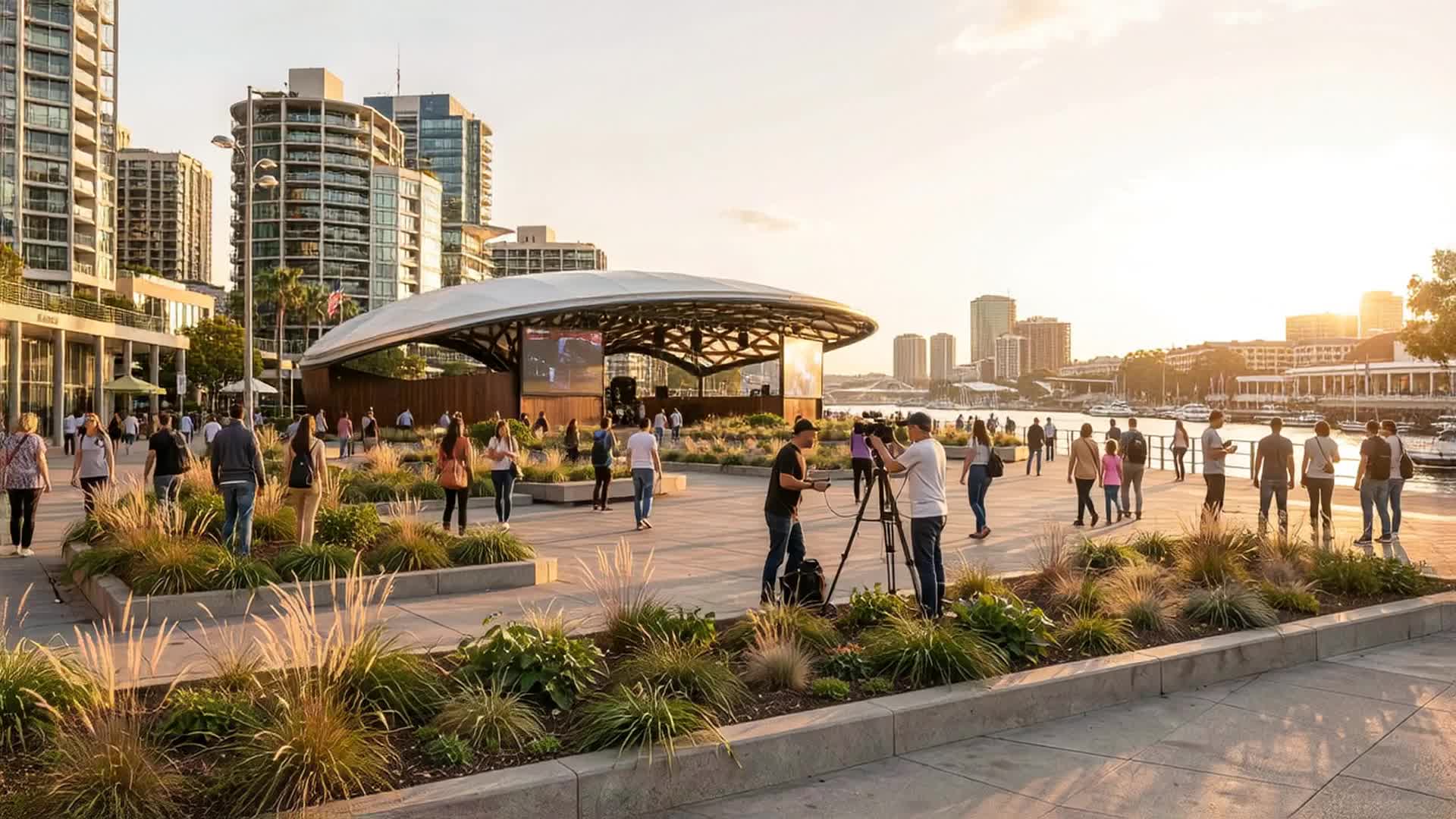
Atmospheric film — not a documented festival.
How the experience moves
How a visitor moves
A way to think about the public journey. Not a claim that every site follows it.
01 Arrival
Approach, entry and the first readable choice.
02 Orientation
Where to go, what is on, how long things take.
03 Discovery
The programme encountered as a place, not only a timetable.
04 Participation
Stages, food, rest — without the site becoming a crush.
05 Movement
Paths that still work when the day is full.
06 Close
Leaving without the operation becoming visible as a failure.
What we consider
What a public site actually asks
These are spatial and operational questions. They are not decoration.
Place
What the site can hold, and what it already means to the people who live beside it.
Audience
Families, artists, partners and crew do not move through a precinct the same way.
Programming
What is on, where it sits, and how people find the next hour.
Movement
Arrival, queues, rest and exit — designed, not hoped for.
Access and safety
Who can participate, and what happens when the weather or the crowd changes.
Suppliers
Vendors and production sharing power, water, time and dignity.
The Canvas approach
The dimensions that lead in public space
Place, people and production usually speak first. Culture when the brief includes community.
Place
The precinct as a designed environment, not a backdrop.
People
Public audiences, artists and the neighbours who did not buy a ticket.
Purpose
Why the gathering is allowed to occupy the ground.
Culture
Community and context — engaged when required, never performed as décor.
Production
Build, operate, strike — against weather and a public clock.
Capability
What we can hold
Produce and deliver are heavy here. Think still decides whether the site should be used at all.
Think
Audience, neighbours and what the ground can honestly support.
Create
Programme and precinct as one idea.
Produce
Infrastructure, vendors and technical against a public timetable.
Deliver
On-site coordination while the precinct is live.
The experience
What the public should meet
A site they can read: arrive, find the programme, move, rest and leave — without carrying the operational load that made it possible.
What happens next
If this is the kind of occasion you are planning
Festival work is published only with permission. This page describes how we approach public environments — not a credit list.